무작위 자릿수 거듭제곱
시간 제한1초메모리 제한1024 MB
평문 a와 암호문 b가 주어질 때, a의 각 자릿수를 거듭제곱해 자리값에 맞게 더하면 b가 되는 지수를 왼쪽 자릿수부터 차례로 구합니다.
문제
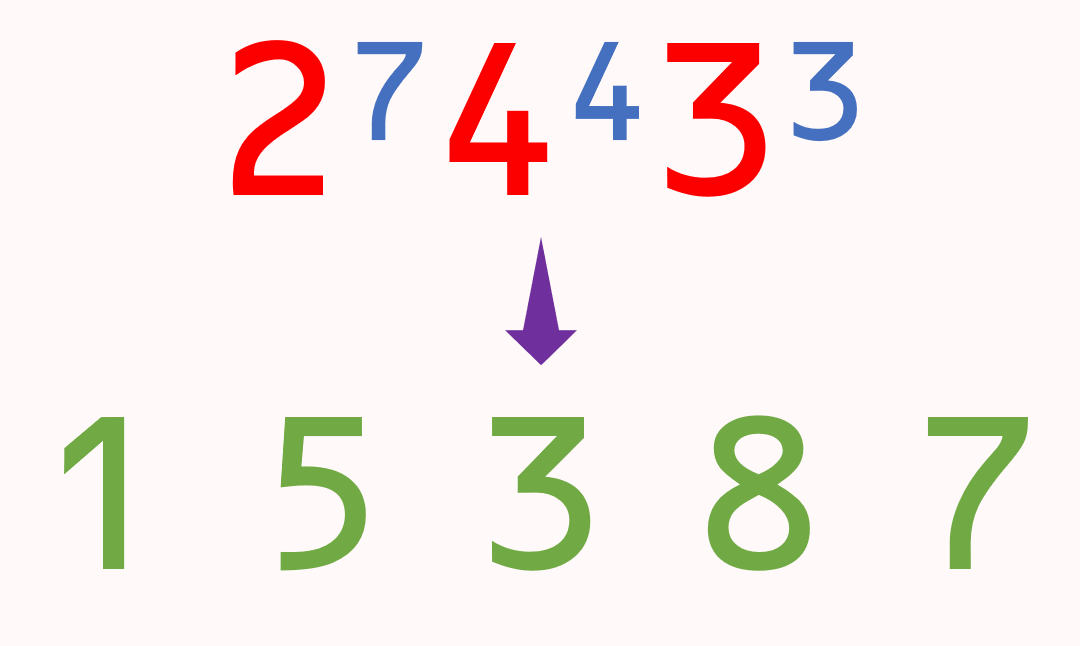
랜덤 자릿수 거듭제곱(RDE) 암호에서는 수 의 각 자릿수를, 무작위로 고른 암호화 키가 정한 지수로 거듭제곱한다. 암호화된 수는 각 자릿수를 그 자리의 자릿값에 맞는 거듭제곱으로 바꾼 결과이다.
예를 들어 이고 암호화 키가 7 4 3이면, 암호화된 값 는 이다.
평문 값 와 암호화된 값 가 주어졌을 때, 사용된 암호화 키를 구하시오.
입력
입력은 하나의 테스트 케이스로 이루어지며, 두 수 와 가 주어진다 ().
출력
암호화 키를 출력한다. 키는 의 가장 왼쪽 자릿수부터 각 자릿수에 적용된 지수를 차례로 공백으로 구분해 적은 것이다. 각 지수는 자연수이다. 암호화 키가 존재하고 유일하다는 것이 보장된다.