힐베르트의 생울타리 미로
시간 제한1초메모리 제한1024 MB
차수 n의 생울타리 미로에서 두 위치 사이의 최단 이동 거리를 구합니다.
문제
David은 정원에 정교한 생울타리 미로를 가지고 있다. 각 미로마다 미로 안이나 주변에 있는 임의의 두 위치 사이를 걸어서 이동하는 데 얼마나 걸리는지 알고 싶어 한다. 차수가 인 생울타리 미로는 다음 절차로 만든다.
- 로 시작한다.
- 다음 과정을 번 반복한다.
- 의 각 를 LBFRAFARFBL로, 각 를 RAFLBFBLFAR로 바꾼 새 문자열 를 만든다.
- 로 둔다.
- 에서 모든 와 를 지운다.
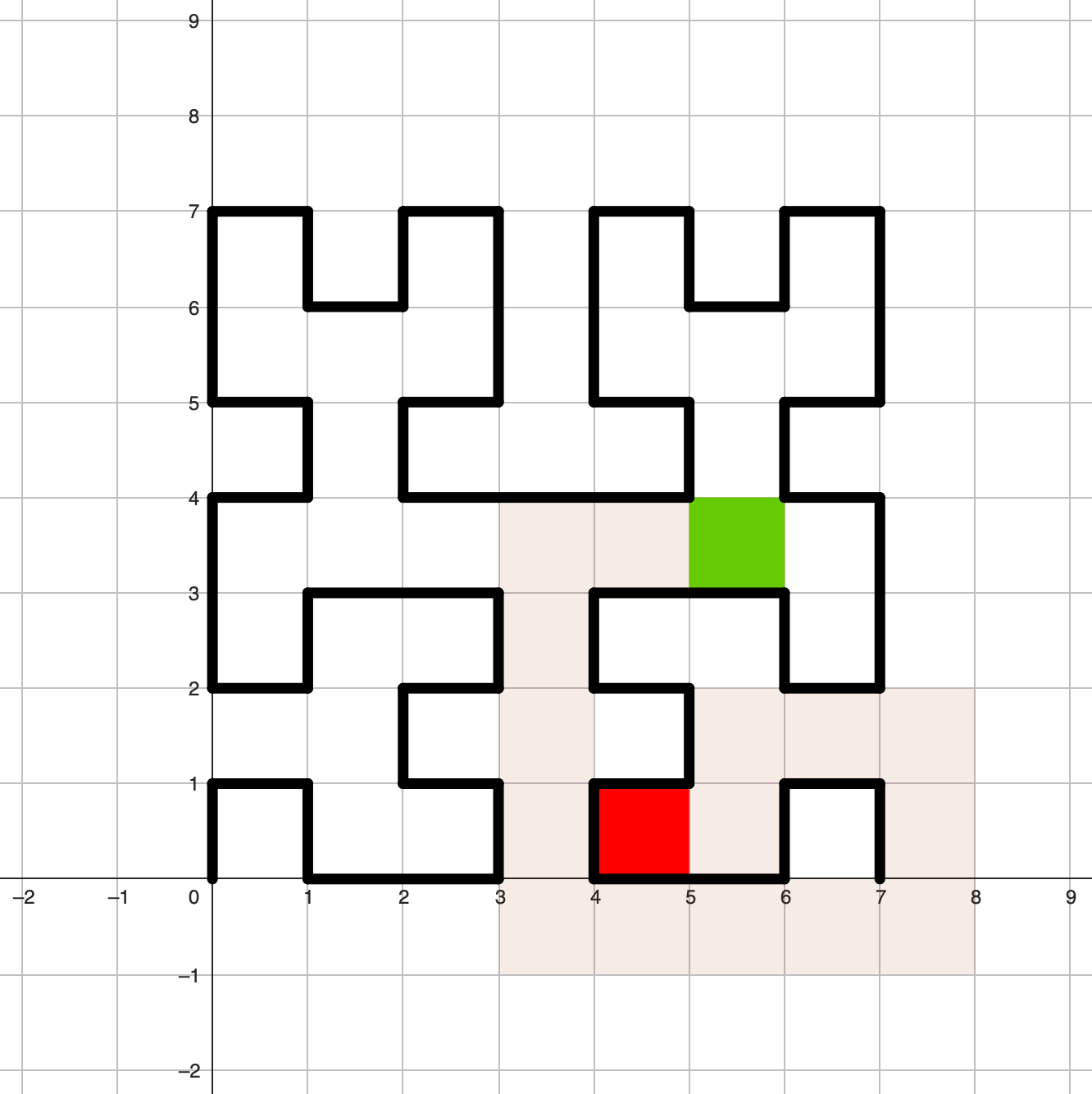
남은 문자열이 미로를 만드는 지시어다. 무한 평면의 원점 에서 방향을 보고 출발한다. F는 한 단위 앞으로 이동, R은 오른쪽으로 90도, L은 왼쪽으로 90도 회전이다.
미로를 만든 뒤 위치 는 꼭짓점이 인 단위 정사각형 칸과 대응한다. 두 위치 , 는 과 중 하나만 성립하고 두 칸 사이에 생울타리가 없을 때 직접 이동할 수 있다. 이때 거리는 1이다. 주어진 과 두 위치에 대해 최단 거리를 구하라.
제한
시간 제한은 1000 ms, 메모리 제한은 1024 MB이다.
입력
첫 줄에 테스트 케이스 수를 나타내는 양의 정수 가 주어진다. 이어지는 개 줄에는 정수 5개 , , , , 가 주어진다. 여기서 이고 이다. 테스트 케이스끼리는 서로 영향을 주지 않으며, 각 케이스는 무한 평면에 홀로 놓인 미로 하나를 나타낸다.
출력
개 줄에 각 테스트 케이스의 두 위치 사이 최단 거리를 한 줄에 정수 하나씩 출력한다.
힌트
첫 번째 케이스의 최단 경로는 다음 그림과 같다.