라틴 방진
시간 제한10초메모리 제한1024 MB
템플릿에서 연속된 k×k 부분 격자 중 서로 다른 원소가 정확히 k개이고 같은 행과 열에 같은 원소가 없는 것의 개수를 구합니다.
문제
Chris는 퍼즐을 좋아한다. 최근 그는 라틴 방진을 바탕으로 한 스도쿠 퍼즐을 알게 되었다. 표에 서로 다른 원소가 정확히 개 있고, 같은 행이나 같은 열에 같은 원소가 두 번 나오지 않으면 이 표를 라틴 방진이라고 한다.
예를 들어, 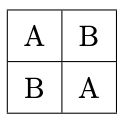 ,
, 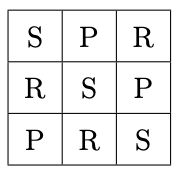 ,
,  은 라틴 방진이다. 반면
 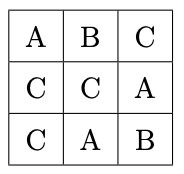 ,
, 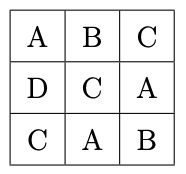 ,
, 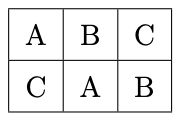 은 라틴 방진이 아니다.
Chris는 새로운 라틴 방진 퍼즐을 만들고 싶다. 그에게는 표 모양의 오래된 템플릿만 있다. Chris는 이 템플릿에서 연속된 라틴 방진 조각을 잘라내려 한다. 이렇게 잘라내는 방법은 몇 가지인가? 두 방법은 한쪽에는 들어 있고 다른 쪽에는 없는 칸이 하나라도 있으면 서로 다른 방법으로 본다.
입력
첫 줄에 템플릿의 크기를 나타내는 정수 과 이 주어진다().
다음 개 줄에는 템플릿을 나타내는 문자열 가 주어진다. 각 문자열은 ASCII 코드가 33 이상 126 이하인 문자 개로 이루어진다. 행 열의 칸은 문자 와 의 쌍으로 나타난다(, ). 두 칸의 문자 쌍이 같으면 두 칸의 원소는 같다.
출력
템플릿에서 라틴 방진을 잘라내는 방법의 수를 정수 하나로 출력한다.
힌트
첫 번째 입력에서 라틴 방진을 잘라내는 방법은 20가지이고, 그 밖에 6가지 방법이 더 있다.
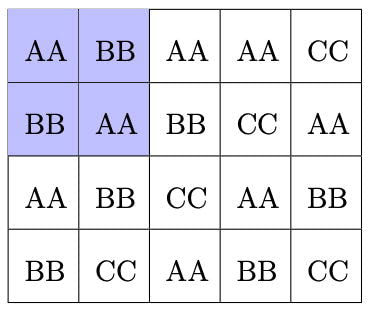 | 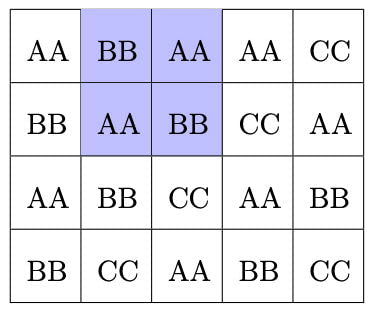 | 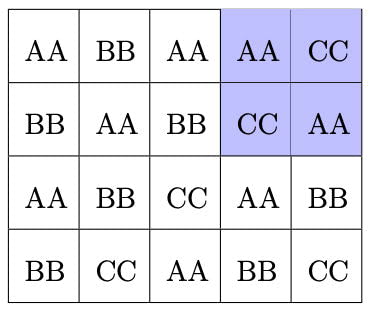 |
| (a) 방법 1 | (b) 방법 2 | (c) 방법 3 |
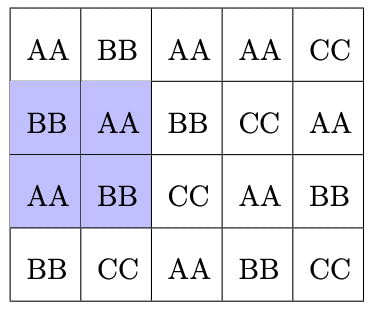 | 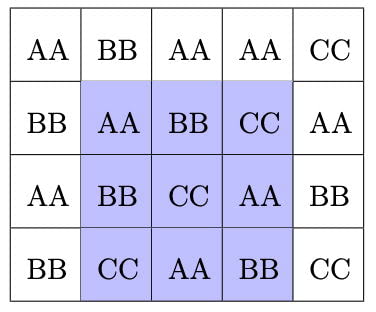 | 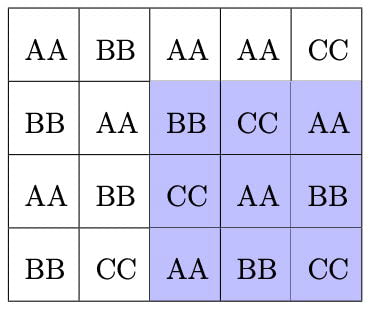 |
| (d) 방법 4 | (e) 방법 5 | (f) 방법 6 |